Best Selling Products

Windows 10 & 11 Pro Key
36 USD

Adobe Premiere Pro Account
99 USD

Capcut Pro 1 Year
39 USD

MidJourney Account
29 USD
Genuine Cheap Canva Pro
39 USD

ChatGPT Plus Account (GPT-4)
16 USD
Upgrade genuine Capture One account
120 USD

Genuine Adobe Illustrator account
99 USD

Upgrade Duolingo Super
29 USD

Freepik Premium Account
59 USD

Plugin Retouch4me
69 USD
Adobe Photoshop Copyright - Full App
120 USD

Upgrade Genuine Office 365
49 USD
Copyright Adobe Lightroom Account
59 USD
Autodesk All App Account Copyright
120 USD
What is Noir Photography? Exploring the Noir Photography Style
Nội dung
- 1. Learn about noir photography.
- 2. Characteristics of Noir-style photography
- 2.1. High contrast
- 2.2. Dramatic Lighting
- 2.3. Mysterious Emotions
- 2.4. Familiar Context
- 3. How to create Noir-style photos
- 3.1. Taking actual photos
- 3.2. Creating images using Adobe Firefly
- 5. Applications of Noir photography
Noir photography is characterized by its dark, dramatic, and cinematic beauty, inspired by classic black-and-white crime films.
1. Learn about noir photography.
Noir photography, or the noir style, is a style of photography or visual art characterized by darkness, drama, and intense emotion. This style draws inspiration from the imagery of classic black-and-white crime films, particularly popular in cinema around the 1940s.
The word "noir" in French means "black ." However, when used to describe an artistic style, noir is not simply about converting images to black and white.
Noir is a technique that uses light, shadow, composition, and setting to create a specific feeling. Images can evoke loneliness, mystery, tension, doubt, or danger.
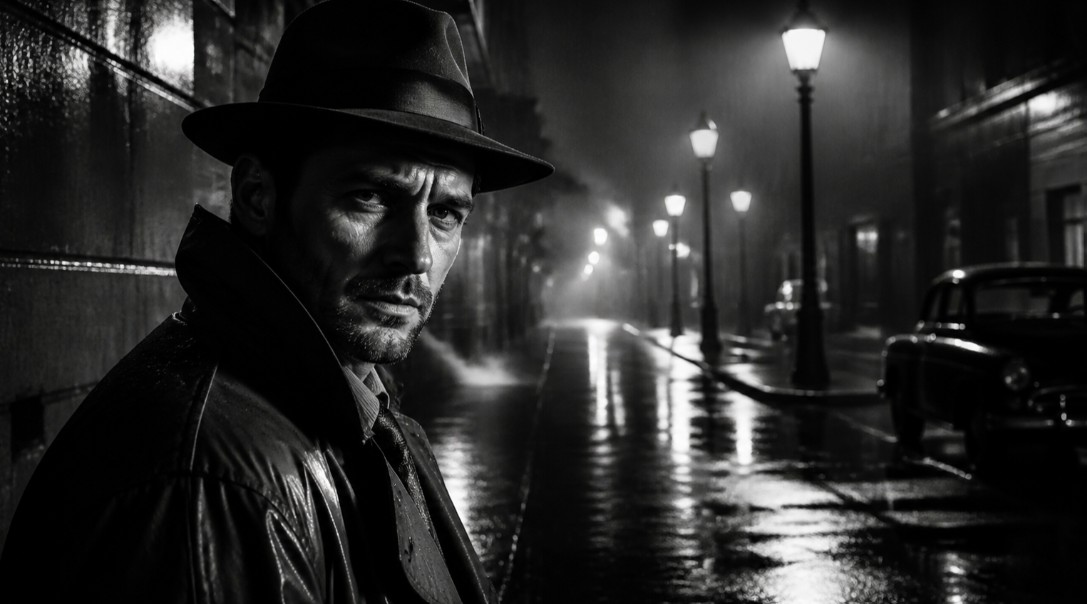
A key characteristic of photographic noir is that viewers often don't see everything clearly. Part of the subject may be obscured in shadow, and the light may be focused only on the face or a specific detail in the frame. It is these areas of shadow that create curiosity and make viewers want to explore the story behind the photograph.
The noir style is therefore suitable for images that aim to convey strong emotions rather than focusing solely on visual beauty.
2. Characteristics of Noir-style photography
To identify a photographic noir, one can rely on many factors such as contrast, lighting, emotion, and context. These elements often combine to create the distinctive overall characteristic of the style.
2.1. High contrast
High contrast is one of the most recognizable characteristics of photographic noir.
The image typically employs two distinct extremes: areas of intense light and areas of deep shadow. Instead of light being evenly distributed across the entire frame, some areas are highlighted while others are shrouded in shadow.
Traditional photographic noir is often presented in black and white , which enhances focus on form, light, and shadow. Without dominant color, the viewer's eye is more likely to notice the differences between light and dark areas.
For example, a face might be illuminated only on one side, while the other side almost blends into the dark background. This treatment creates a sense of mystery and drama.
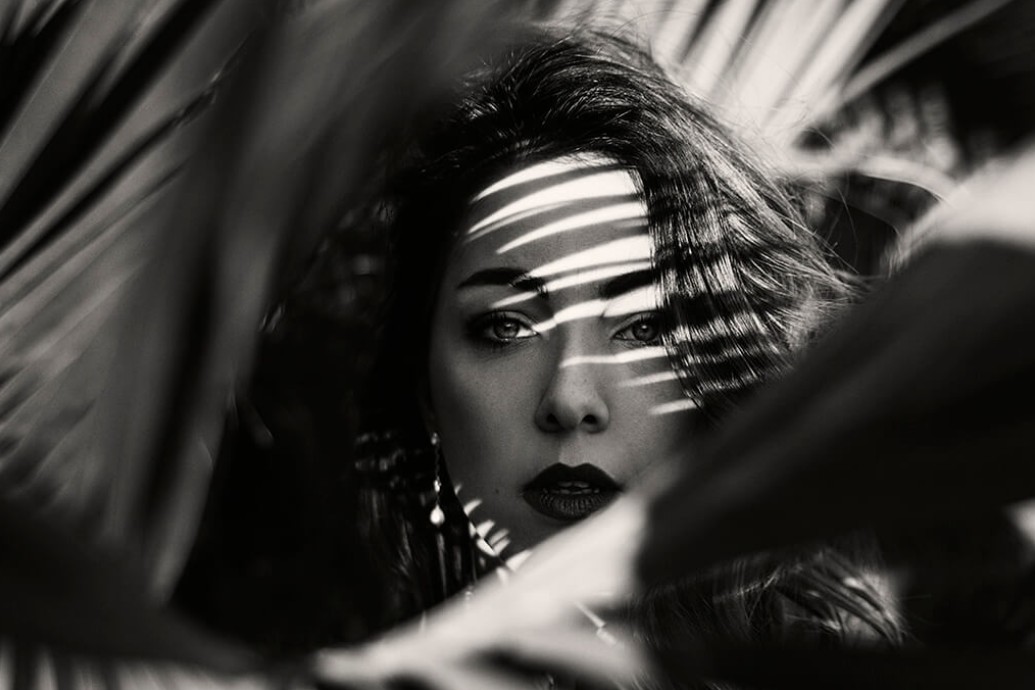
However, modern noir doesn't necessarily have to be entirely black and white. Some works still use color but retain the characteristic strong contrast and deliberate lighting.
2.2. Dramatic Lighting
Lighting is a crucial factor in determining the quality of a photograph's noir.
This style often employs low-key lighting techniques , where the overall frame is relatively dark but still has some clearly controlled bright areas.
The light source is often positioned to one side rather than shining directly onto the subject. This arrangement creates distinct shadows on the face, body, or background.
A familiar example is light shining through shutters or curtains, creating bands of light and shadow on a wall or a character's face.
Smoke and fog can also enhance visual effects. When light passes through a lightly foggy or smoky environment, the light rays become clearer, creating a cinematic effect.
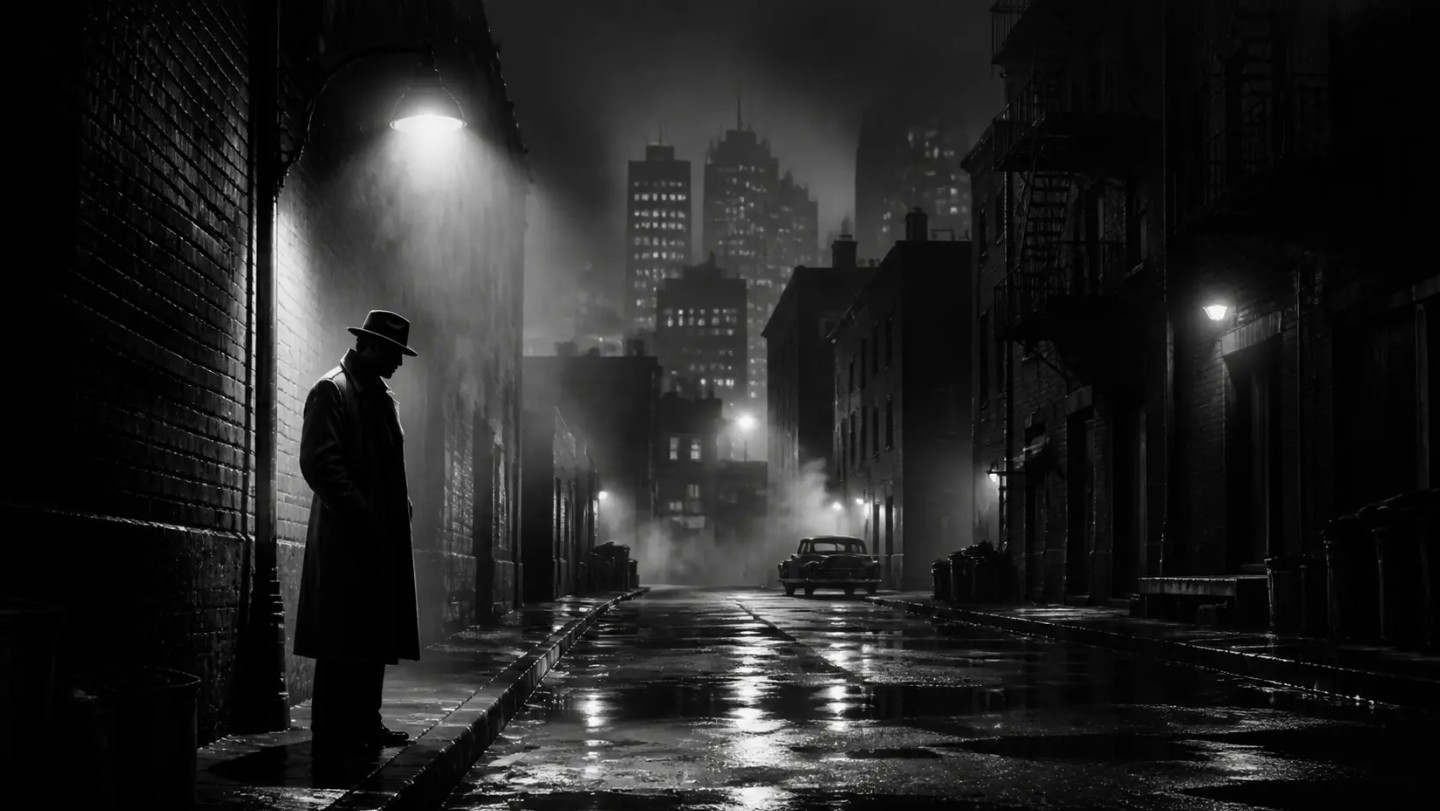
Long shadows cast on walls, solitary streetlights, or a face only partially illuminated are all common techniques used in photographic noir.
2.3. Mysterious Emotions
Noir photography is not just about lighting techniques; it also focuses on emotion.
A photograph can evoke feelings of doubt, loneliness, tension, or danger in the viewer even when no obvious action is taking place in the frame.
For example, a figure standing alone under a street lamp in a deserted city can evoke a sense of loneliness. A person standing behind a curtain, revealing only their silhouette, suggests mystery.
Interestingly, noir often doesn't explain the entire story. The imagery only provides clues, leaving the viewer to draw their own conclusions.
This is why the noir style is often used in imagery related to detective films, crime dramas, or investigative stories.
2.4. Familiar Context
Setting plays a crucial role in creating the atmosphere of noir.
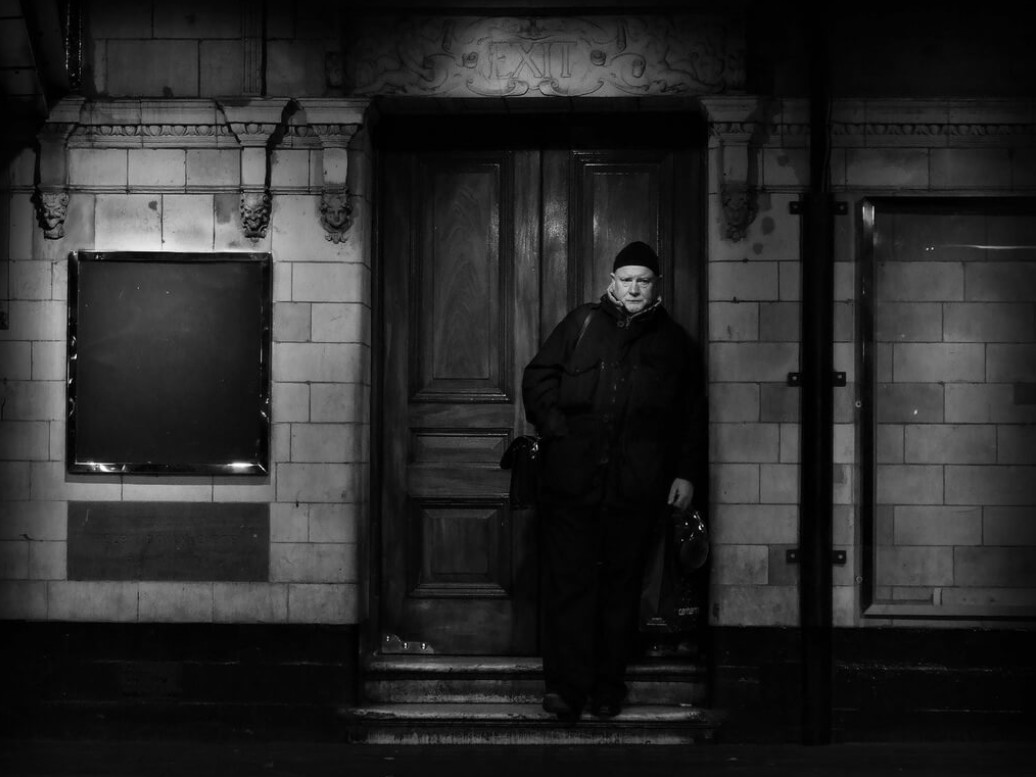
Familiar locations such as streets at night, quiet alleyways, old offices, sparsely populated cafes, or rooms with only one light source can all serve as suitable backdrops.
The image of a city in the damp rain is one of the most common imagery. The streetlights, signs at night, and the shadows of people passing by reflect the city's surroundings, creating a strong visual depth.
Smoke, fog, or steam are also often used to create a more hazy atmosphere in the setting.
The common thread among these settings is that they don't need to be overly elaborate. More importantly, it's the way light is used to transform an ordinary location into an emotionally rich space.
3. How to create Noir-style photos
There are many ways to create photographic noir. You can take actual photos with a camera or use AI tools to quickly experiment with ideas.
3.1. Taking actual photos
To begin shooting noir photography, you don't necessarily need a complex lighting system.
One simple method is to use a single artificial light source , such as an LED or flashlight, in a relatively dark room.
First, reduce the amount of ambient light so that the main light source can clearly illuminate the subject. Then, position the light to one side instead of shining it directly onto the face.
Next, adjust the position of the light to create sharp shadows. You can try placing the light higher, lower, or angled to one side to change the shape of the shadows on the face.
Once you have the basic lighting in place, try adding supporting elements such as curtains, shutters, or a surface that can create shadows. Light passing through these gaps will create distinctive bands of light.
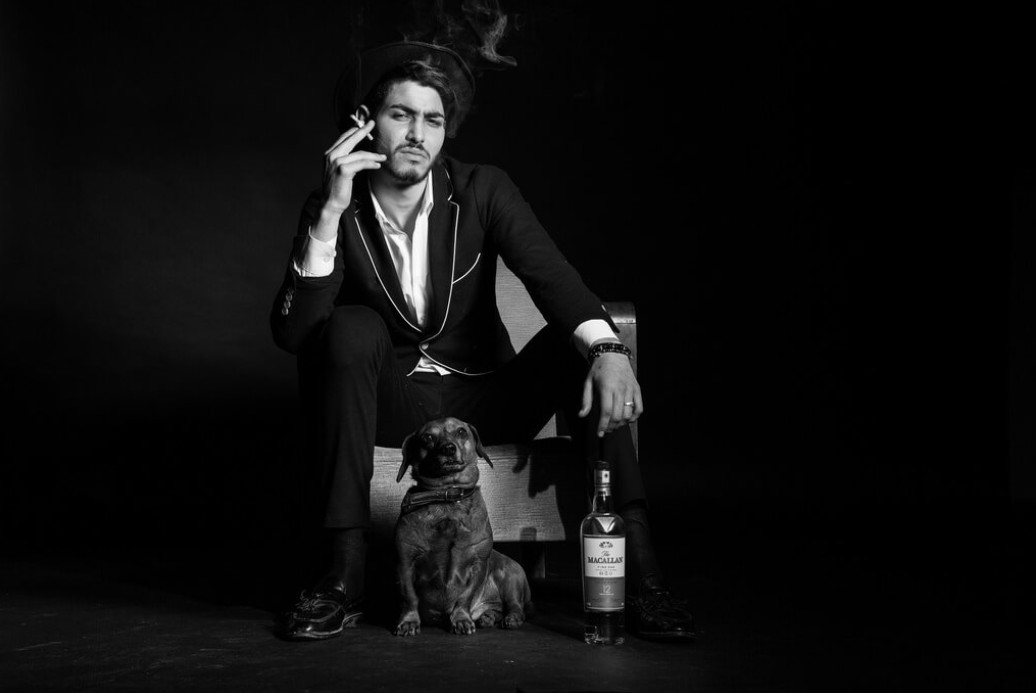
Finally, observe the background. A dark, less detailed background often helps the subject stand out more.
3.2. Creating images using Adobe Firefly
If you want to quickly experiment with the noir style without preparing a real-life setting, you can use AI image creation tools like Adobe Firefly .
This method begins with a statement describing the image. The more clearly you describe the subject, background, lighting, and emotion, the more solid the result will be in adhering to the intended idea.
Ví dụ, hãy bắt đầu với câu lệnh: “A solitary figure standing under a single streetlight on a rain-soaked city street, cinematic film noir, high contrast, deep shadows, dramatic lighting, atmospheric fog, black and white photography.”
This statement describes the character, setting, lighting, shadows, fog, and black-and-white style.
To enhance the cinematic feel, you could add: “Classic 1940s film noir atmosphere, dramatic side lighting, deep shadows, strong contrast, wet pavement reflections, mysterious mood, cinematic composition.”
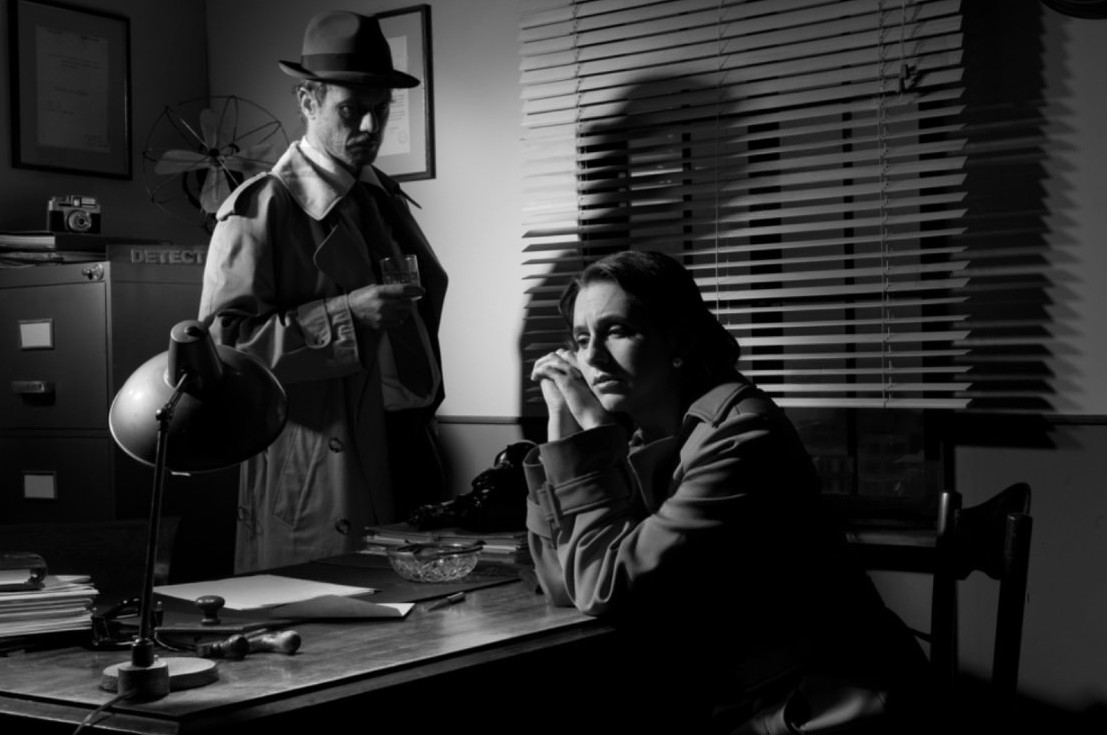
Bạn cũng có thể thử một bối cảnh khác: “A mysterious detective standing alone in a dim office, single desk lamp, dramatic side lighting, deep shadows, high contrast, classic black and white film noir photography, atmospheric and cinematic.”
After creating the image, observe any elements that don't meet your expectations and continue adjusting the settings. If the image is too bright, add "deep shadows" or "low-key lighting ." If you want stronger contrast, add "high contrast." If you want to enhance the vintage feel, you can use "classic black and white film noir" or "vintage cinematic photography . "
4. How to create an impressive Noir photograph
An effective photographic noir doesn't usually depend on a single element. Lighting, subject, background, and composition need to complement each other.
First, determine the emotion you want to convey. If you want to create a sense of loneliness, a character standing alone in a large space might be suitable. If you want to create mystery, partially obscure the subject with shadows.
Next, choose a suitable light source. A single light source usually makes it easier to control highlights and shadows.
The composition should also be carefully considered to direct the viewer's attention to the subject. Lines of light, shadows, windows, or streetlights can be used as eye-guiding elements.
Finally, remember that not every detail needs to be visible. The obscured areas can be the most important part of a photographic noir because they create questions and stimulate the imagination.
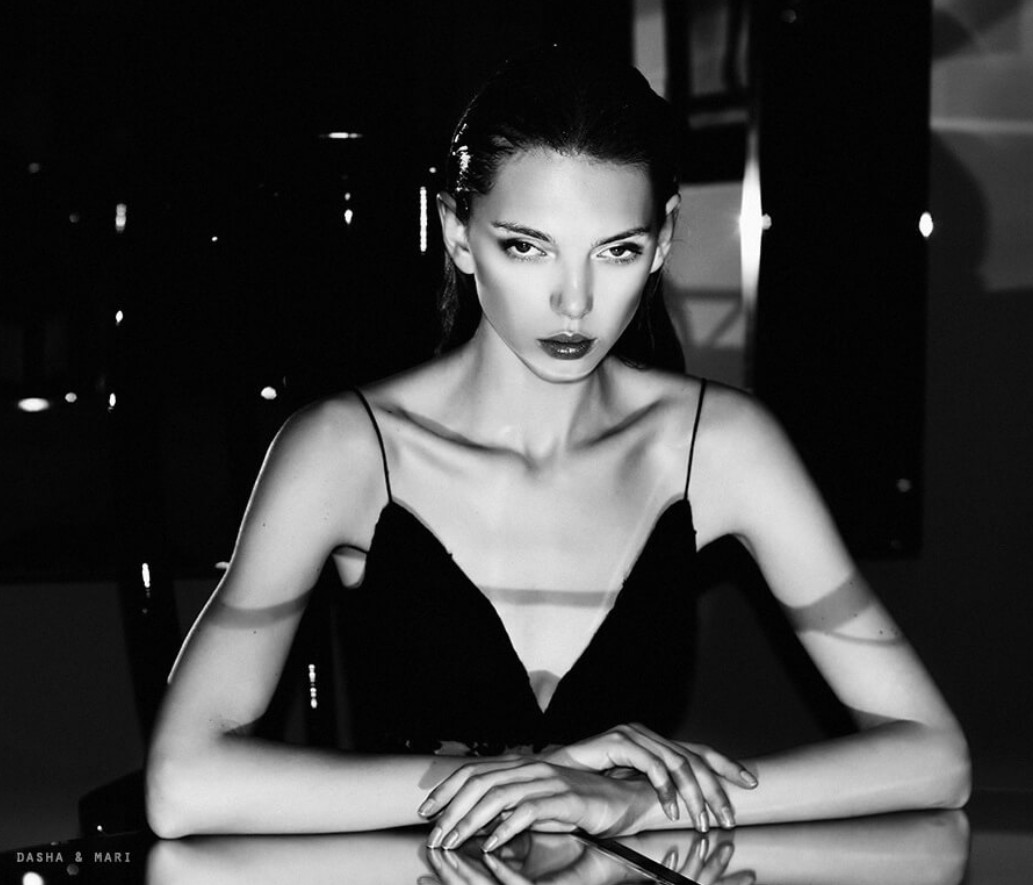
5. Applications of Noir photography
Today, photographic noir is not limited to art photography. This style is also applied in many creative fields.
Movie posters, commercials, book covers, album designs, social media content, and digital art projects can all incorporate elements of noir.
In particular, this style is suitable for content that aims to create a mature, mysterious, or cinematic feel. A well-crafted noir image can help a design stand out among the more vibrant and conventional images.
In digital design, users can also combine noir photography with typography, lighting effects, and minimalist layouts to create cinematic-style posters.
The essence of noir lies in how you control light, shadow, and emotion . By knowing how to utilize small areas of light within dark spaces, you can transform a simple scene into a narrative-rich and cinematic image.















VIP Products




Best Selling Products
Windows 10 & 11 Pro Key
36 USD
Adobe Premiere Pro Account
99 USD
Capcut Pro 1 Year
39 USD
MidJourney Account
29 USD
Genuine Cheap Canva Pro
39 USD
ChatGPT Plus Account (GPT-4)
16 USD
Upgrade genuine Capture One account
120 USD
Genuine Adobe Illustrator account
99 USD
Upgrade Duolingo Super
29 USD
Freepik Premium Account
59 USD
Plugin Retouch4me
69 USD
Adobe Photoshop Copyright - Full App
120 USD
Upgrade Genuine Office 365
49 USD
Copyright Adobe Lightroom Account
59 USD
Autodesk All App Account Copyright
120 USD